
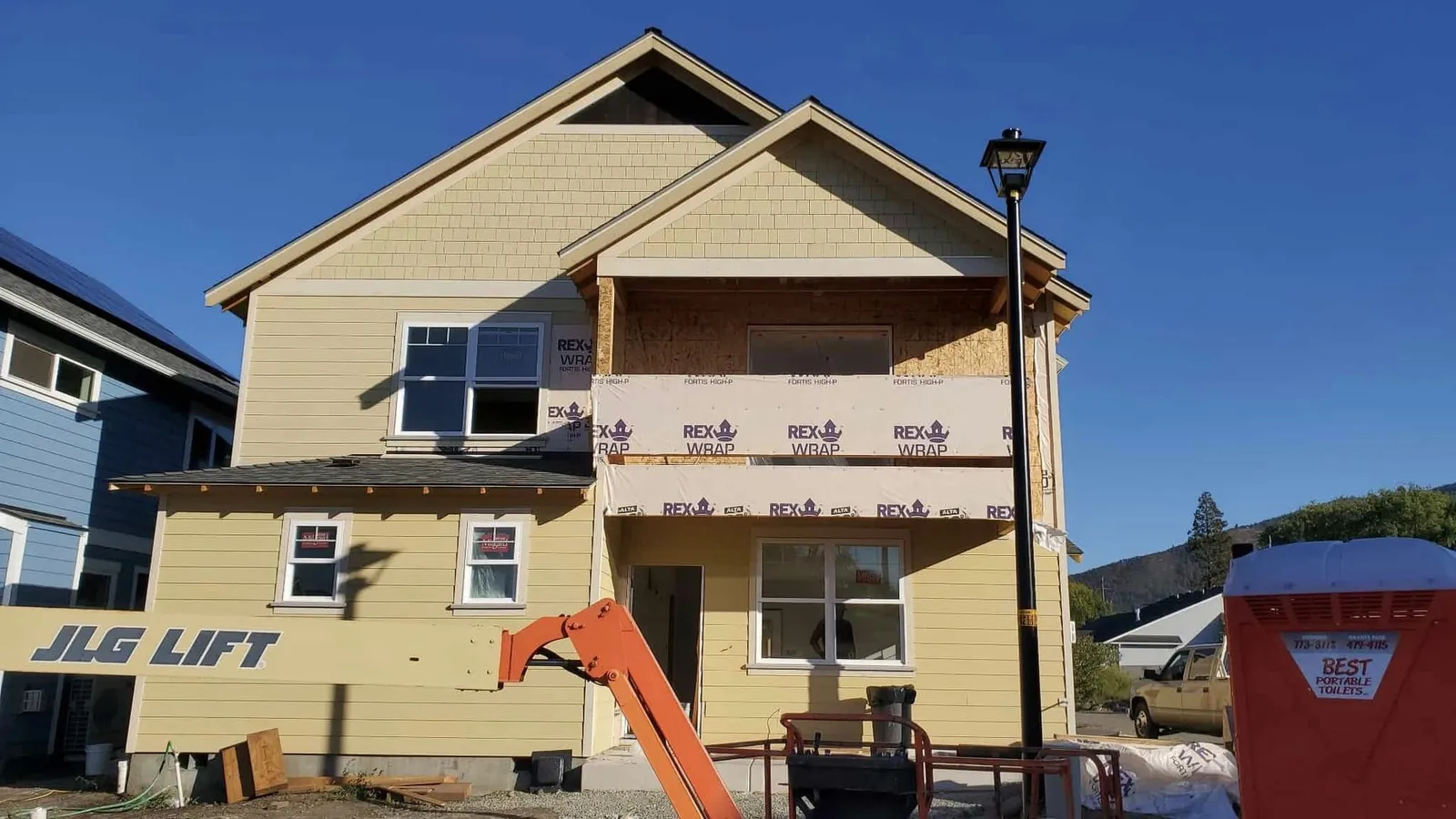
Siding is one of the bigger calls you make as a homeowner. The product on the wall sets the look of the house for the next 20 to 40 years, and the install details decide whether it actually gets there. In Southern Oregon, the call is shaped by a few specific things: sun exposure, fire risk in some neighborhoods, and the mix of older valley homes with newer hillside construction.
Here's how we walk homeowners through the decision when we show up for an estimate.
Start With Fire Safety in Fire-Prone Areas
If your home sits in a hillside neighborhood or in one of the areas that's been touched by wildfire over the past decade, fire-rated siding has to be on the table. Fiber cement is Class A fire-rated, non-combustible, and the install spec includes the soffit, eave, and clearance details that matter when embers are part of the equation. Stone veneer is also non-combustible. Vinyl is not. Wood is not, but cedar can be treated for fire resistance. A fire-rated wall pairs best with a non-combustible roof, and we walk through that trade-off in our guide on metal roof vs. asphalt shingles.
For homes in Phoenix, Talent, the hillsides around Ashland, and parts of the Applegate Valley, this conversation usually starts the material discussion.
Match the Material to the Architecture
The look of the house should drive part of the call. Real wood siding has grain and depth that vinyl and fiber cement can't fully replicate, no matter how good the embossing is. On a Craftsman or Victorian in Jacksonville or Ashland, real cedar reads right in a way nothing else does.
Fiber cement reads close to wood from the curb and works on almost any architecture. It's especially common on newer construction and on renovation packages where curb appeal and long life are both priorities.
Vinyl has come a long way. Modern board-and-batten and shake-profile vinyl looks surprisingly close to the real thing from 20 feet, and on farmhouse, ranch, and cottage homes it can be a strong fit.
Stone veneer is almost always an accent. A wainscot under the siding. A feature column at the entry. A full stone facade on the front elevation. It anchors the look of whatever else is on the wall.
Think About Maintenance Honestly
Wood is a working material. Plan on a finish refresh every 4 to 12 years depending on exposure and finish type. If that schedule fits your life, wood pays you back with curb appeal that nothing else matches. If it doesn't, vinyl or fiber cement is the better call.
Vinyl is the lowest maintenance option. You don't paint it, you don't stain it, you hose it off occasionally and it keeps doing its job. The trade-off is a shorter useful life than fiber cement and a look that's harder to fully customize.
Fiber cement sits in the middle. The factory-finished product holds its color for 15+ years before needing anything beyond a wash. Paint-grade gives you any color you want and is easier to touch up over time.
Don't Ignore the Install Details
The product you pick matters. The install matters more. We've seen perfectly good fiber cement turn into a callback magnet because the fastener pattern was wrong or the kick-out flashing at the roof-wall intersection was missed. We've seen real cedar siding rot out in 8 years because the contractor skipped back-priming. We've seen vinyl that's been on the wall for 30 years and still looks fine because the install was right.
The install details that matter most:
A contractor who scopes the install details up front is a contractor whose work holds up.
The Conversation We Like to Have
When we come out for a siding estimate, we walk the property and we ask three questions. How long do you want this to last? What's the budget? What's the look you're going for? The answers usually point clearly to one of the four materials we install. Then we walk through trade-offs, talk through the install spec, and write a line-by-line scope so you know exactly what you're paying for.
If you're thinking about siding for your Southern Oregon home, book a free estimate online. Two minutes, pick your time, and we'll come walk it with you.